My Formula for B2B Webinars That Don't Suck
Webinars can be the most mind-numbing, drivel-inducing waste of time, making you want to throw your computer screen into the Hudson River while screaming “They’re all corporate shills!” at the top of your lungs.
Sometimes they’re okay though.
So after hosting 100+ webinars, some with over a thousand participants, I figured I’d share my favorite formula for a killer webinar . When done right, these webinars pull in B2B PR coverage, get you stopped at webinars for autographs (okay, honestly, just to say hi), and actually feeds pipelines with buyers.
Here goes.
Four Key B2B Webinar Guidelines
-
Substance Over Showmanship: Like most thought leadership and content marketing, a lot of it comes down to 🥁🥁🥁… if you don’t have anything to say, just keep your mouth shut. Celebrity guests are great but overindex on people who have smart things to say and know how to deliver a message. Good delivery + content > Brand Name . There is too much lies and BS on the internet. Deliver truth.
-
Prep: Invest 20-25 minutes to sync with your speaker on topics that resonate with your audience and that, more importantly, they are passionate about. Bored speaker = bored guests.
-
Conversation Pillars: Based on that sync, identify two or three core topics and find data points or industry trends to build up into them. Then come up with crisp questions that encapsulate each. You’re going to spend the webinar making your guest look smart; the questions you ask are where you get a chance to establish your personal and brand credibility.
-
Don’t sell: You’re going to build in two sections where you deliberately push your product or brand. Do everything humanly possible to only sell there.
My Ideal B2B Webinar Structure for Thought Leadership
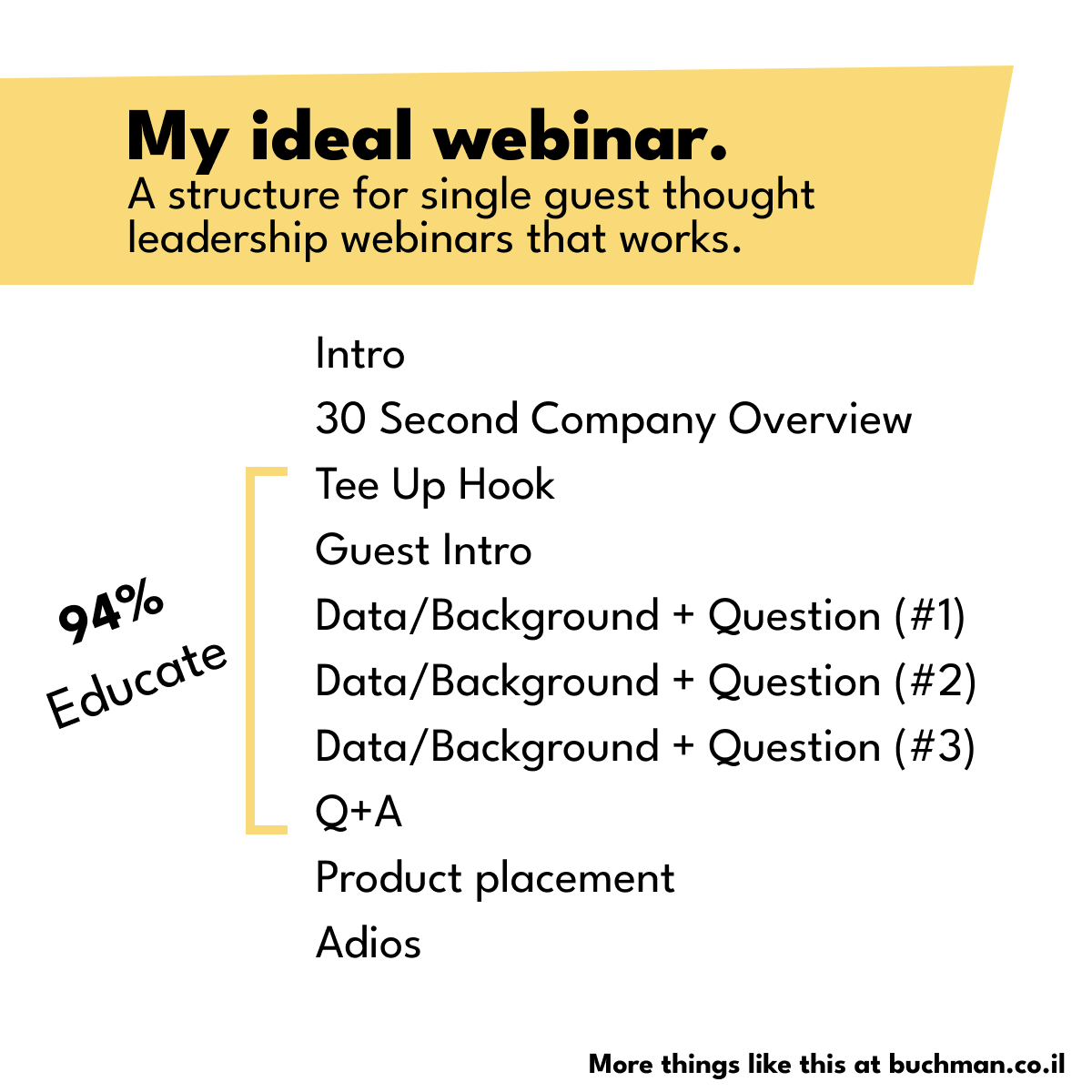
Quick overview of structure
-
Quick introduction: Welcome people and give a quick overview of the topic.
-
Company intro: 30-45 seconds on your company, primarily presented as why you feel qualified or what pushed you to host this webinar.
-
Capture Attention: Lead with The Big Question and use it to intro your guest.
-
Guest intro: Let the guest present themselves. Briefly. They are going to impress people with their content, not their resume.
-
The meat: Present a data point or trend that you identified and use it to segue into your question to the guest. This is not a stand-alone question - it’s a starting point for a back and forth conversation that should go 4-8 minutes. In general, videos deliver authenticity in a way that most mediums don’t. Leverage it!
-
Repeat: Use your suave convo skills to repeat that 2-3 times, depending on available time, your guest’s chattiness and the earth’s rotation. Remember, your guest is the hero, not you. Your job is to make them look smart.
-
Q&A: If you’re an awesome multi-tasker, let people ask questions by chat during the webinar to steer the conversation. If not, throw in a dedicated session at the end.
-
Push: Explicitly mention that the next 45 seconds will be an ad, which subtly reinforces that anything else before was not (sneaky, right?), and then push your relevant product or service. It’s okay if you don’t too.
-
Mic drop: 🎤
If you’re interested in more, you’ll love this podcast episode where I dive into great webinar formats.
Frequently Asked Questions
How do you get people to actually show up to a B2B webinar?
The single biggest driver of attendance is speaker pull — people register because they want to hear a specific person, not because they want to attend a webinar. Identify 1-3 speakers with existing audiences in your target market. Their promotion to their networks will do more than your email list. Pair that with a subject line that promises a specific, useful outcome rather than a generic topic.
What is the ideal length for a B2B webinar?
45-60 minutes is the practical ceiling for live attendance. Structure it as 35-40 minutes of content + 10-15 minutes of Q&A. If you can’t fill 35 minutes with high-quality substance, run a tighter 30-minute session rather than padding. Shorter and dense beats longer and padded every time.
Should you gate the webinar recording?
It depends on your goal. If your goal is pipeline, gate it with a form and use it for lead nurture. If your goal is authority and reach, publish it openly and optimize for clips and summary content that travels further than a full recording. The best webinars do both: gated recording for direct leads, short clips for distribution.
How do you get speakers to promote the webinar to their audience?
Make it absurdly easy. Provide pre-written LinkedIn posts, email templates, and a one-click asset pack. Brief the speakers before the webinar in a 20-minute call where you align on the key insights they’ll share — this makes them more confident and more likely to promote. Don’t ask speakers to write their own promotion copy.
How do you measure B2B webinar success?
Track three things: (1) registration-to-attendance rate (benchmark: 40-50% is healthy), (2) engagement signals during the webinar (questions asked, poll participation), and (3) downstream pipeline from attendees within 90 days. Also track secondary distribution: were clips shared? Did it generate press coverage? For thought leadership webinars, media pickup is a stronger signal than raw registration numbers.
Let's make a deal. Drop your email and I'll let you know when I post new insights.