How to Open an Alien Embassy: A Playbook for Building a Brand Newsroom From Scratch
tldr
A brand newsroom isn’t a blog, a content calendar, or a PR function. It’s an embassy you open inside an industry that didn’t invite you. This post walks through the full playbook I used to build one at Freightos — from mission to credentials to ambassadors to state dinners — plus an honest anti-pattern list of the ways I’ve seen this fail, usually because I was the one failing it.Imagine, for a second, that you are an alien. A legal one, relax.
You’ve been dispatched, under orders from your home planet, to open an embassy on a new planet. Your ship is small. Your budget is smaller. The natives don’t know you.
They don’t particularly want you there. They’re good, thanks.
They have their own media, their own politics, their own gossip, their own experts. Their own Andy Sambergs. Their own Ace Venturas. Decades — hell, centuries — of in-jokes you’ve never heard of.
They are, broadly speaking, busy.
You have a budget, a small staff, a ship, and a mission. You also, crucially, have nothing native to them. No local celebrity. No ancestral ties. No billboard reserved at the airport. Your three-armed handshake makes people uncomfortable.
What you do have is a challenge: build a reason for them to give two shits about who you are and why you just landed, uninvited, on their front lawn.
Congrats. You now know, more or less, what it feels like to open a brand newsroom.
I’m leading with the alien metaphor (rather than the always-attractive “content is king” motivational poster) because most companies that set out to build a newsroom don’t even know they are the alien.
They arrive, plant a /blog flag, publish a press release titled “We Are Revolutionizing The Industry,” and then act personally wounded when the locals don’t throw them a parade. Of course they don’t, you doofus. You’re an alien. You mean, to put it bluntly, less to them than the gunk in their sneaker treads. And they see through your act — they’re reading “innovative cutting-edge solutions” on your website header right through your antenna.
I spent almost a decade building what I now know is a brand newsroom. I got a lot of it wrong. My first-ever GTM plan took me to a festival involving sheep. In Dublin. My first “reporter outreach” email was answered within four minutes by a reporter politely asking to be unsubscribed from a list he had never signed up for. I once published a BuzzFeed-style listicle of cringe photos of shipping containers falling off trucks, which is either career-defining or career-ending depending on your frame of reference.
My embassy, in those early years, was the diplomatic equivalent of a men’s bathroom at a poorly maintained but highly trafficked truck stop. It did not build a bridge with the local population. It mostly smelled.
So what follows is the playbook I wish someone had handed me at customs.
First, Why The Hell Are You Opening An Embassy?
Embassies have missions. Real ones. Saudi Arabia doesn’t open embassies for the same reason Peru does (that one’s to Per-sue international relations, amiright). A military embassy is built differently from a trade embassy, which is built differently from a cultural embassy. The furniture, the staff, the events, the guest list, the dumb little cocktail napkins with the national seal on them — all downstream of the mission.
Brand newsrooms are the same. This is step zero. Why are you doing this?
There’s a menu. Pick an entrée:
- Brand visibility. You want to be known by the industry. This is the fun cultural attaché. Hosts parties. Wears interesting socks. Metrics: mentions, shares, “oh yeah I’ve heard of them” recall.
- ICP targeting. Trade embassy mode. You want the specific 5,000 people who could actually buy your product to know you exist and respect you. Small, focused, nobody else invited. Metrics: inbounds from named accounts, pipeline.
- Analyst and media positioning. You want to be the company a reporter calls when something happens in your industry. Diplomatic press embassy. Runs on credibility with maybe forty humans who shape the narrative. Metrics: citations, quotes, being named without being pitched.
- Revenue. You want to ship pipeline directly. The embassy with a commercial attaché who keeps trying to close deals at the champagne reception. Metrics: attributed deals.
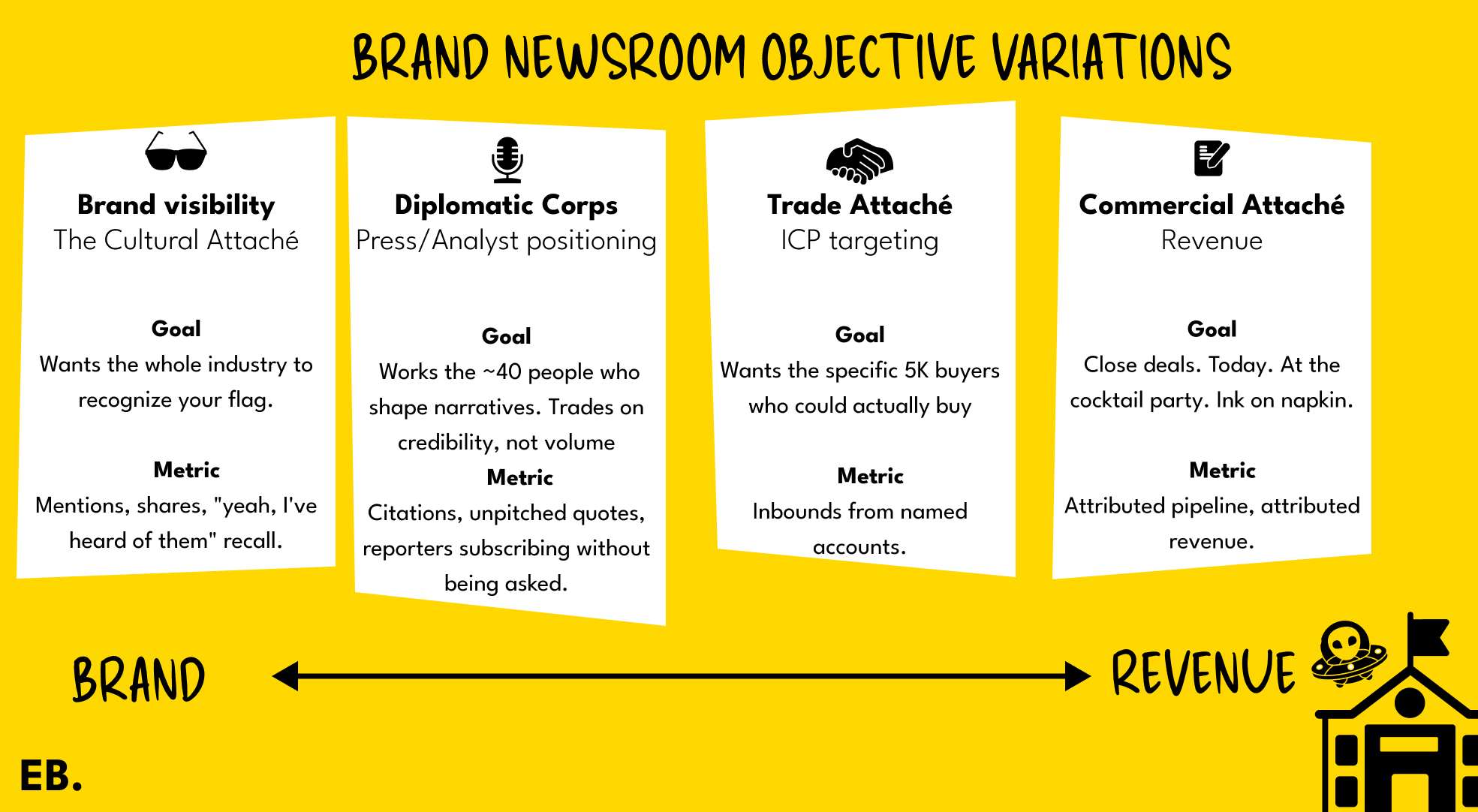
Pick your attaché. Chasing four at once is how aliens get deported.
A well-run newsroom can, eventually, do all four.
But it starts with one. Pick it. Tattoo it on your planning doc. Chasing one is hard. Chasing four simultaneously is how aliens get deported.
Every subsequent decision — what you publish, who you staff, where you distribute — flows from the primary mission. Mission drift is how you end up with a newsroom that publishes six posts a month and can’t tell anyone what it’s for. But hey, at least you have an embassy. It has a flag. The flag is blue.
At Freightos, our primary mission was positioning with the press and serious industry buyers.
The revenue came later (I’ll get to it, I promise). But trying to sprint toward all four at once in year one is how you end up with an embassy that’s also a nightclub that’s also a courthouse. The natives know it’s off. Deep down, you know it too.
Your Credentials: What Are You Actually Bringing?
The second thing an embassy needs — and this is the part most companies skip, to their cost — is credentials. What are you bringing that the natives don’t already have?
The locals, in any B2B industry, have been there forever. They’ve seen every brand come and go. They have their own reporters, their own conference circuit, their own Slack/WhatsApp/MySpace groups, their own hall-of-fame figures whose last names are used as verbs. If you show up with a keynote titled “The Future of [Their Industry],” they’re going to look at you the way a fisherman looks at a Martian trying to explain ocean currents.
Three credentials are worth having. Bring at least one. Shoot for two:
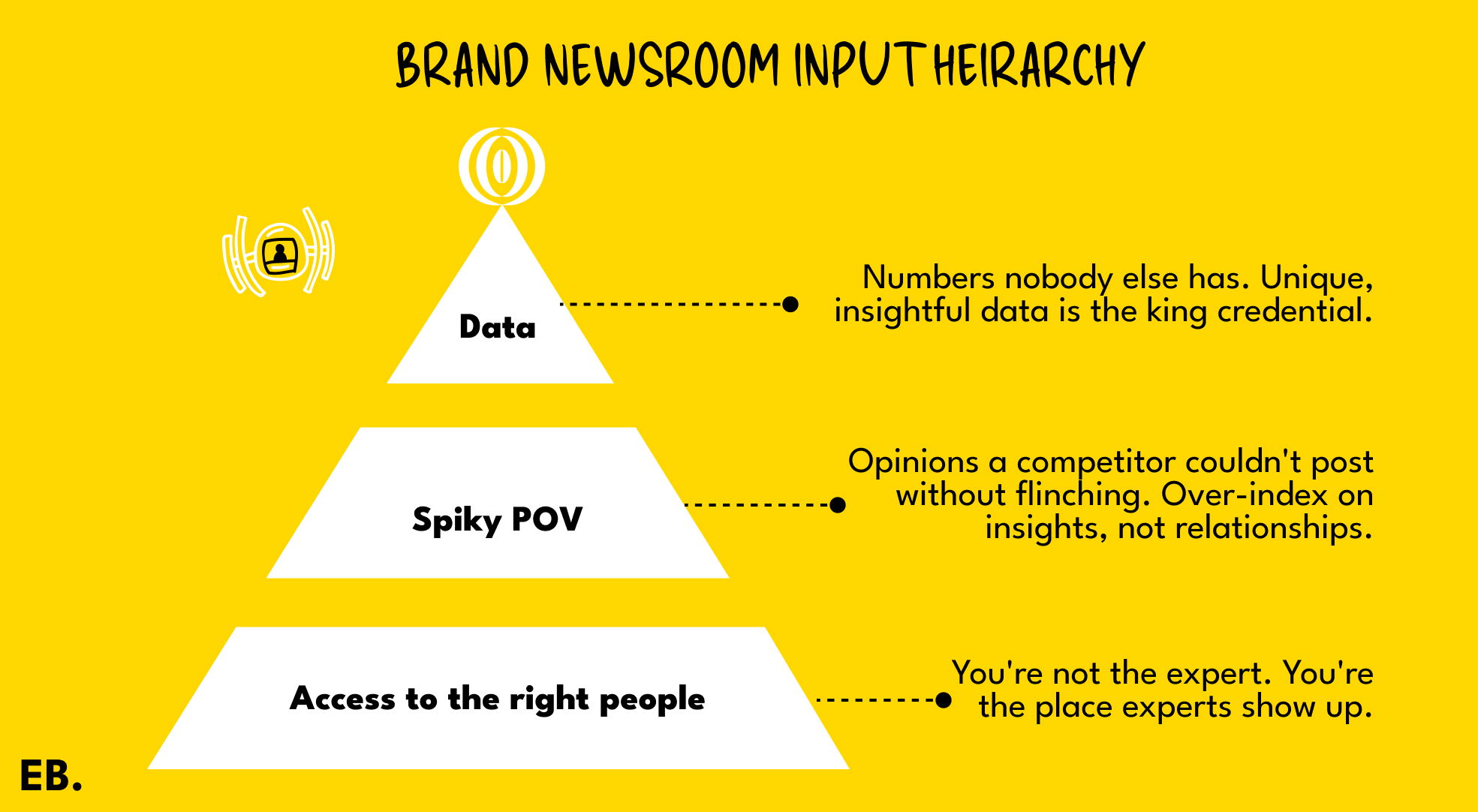
The credentials hierarchy. Bring one. Shoot for two. Zero and you stay on the ship.
1. Data nobody else has. The king credential. At Freightos, we had actual transaction data on freight prices across the global supply chain. Not estimates. Not surveys. Actual bookings. We eventually packaged it into the Freightos Baltic Index, which Reuters, the Wall Street Journal, and Bloomberg now cite as the benchmark for ocean container rates. It didn’t start as an index. It didn’t even start as a spreadsheet. It started as a weekly email I hacked together because, in an industry full of wildly smart humans, almost nobody was publishing this data consistently for free. We became the weather station in an industry that had been squinting at the clouds for fifty years.
You don’t need to be a freight company to have data. Cybersecurity companies know which attack vectors are surging. HR software companies know how people are really hiring. Commerce platforms know what’s selling and where. Most companies are sitting on an industrial-scale exhaust pipe of data nobody’s ever bothered to publish. (Long version of this argument here, and the Hard Signal Protocol covers how to vet whether your data is actually worth publishing.)
2. A spiky point of view. If you don’t have data, you better have opinions — and not the vanilla ones. “We believe in the customer” is not a point of view. “The freight forwarding industry is wildly over-indexed on relationships and under-indexed on data, and that’s structurally why margins are collapsing” is a point of view. “AI agents will either collapse or run the industry within five years, and here’s how to tell which” is a point of view. The test: could a competitor paste this exact sentence on their website without flinching? If yes, it’s not a point of view. It’s a mutual industry mission statement, signed by everyone, meaning nobody.
3. Access to people worth hearing from. You might not be an expert. That’s fine, actually — sometimes preferable. But if you can get twenty industry veterans on the phone, or bring in a big-name interview every month, you become the venue. I wrote a whole method for this called the Expertise Amplification Method, but the short version: you don’t have to be the expert. You have to be the place experts show up.
If you have zero of these three, do not open the embassy. Turn the ship around. Go back to the home planet, spend a year building one of them, and then come back. Opening an embassy with nothing to offer is how you end up with a /blog that publishes “5 Ways AI Is Transforming Logistics” once a quarter while the entire industry scrolls right past it on the way to actually useful content. The natives will wave politely. They will not visit.
Scouting the Planet (Before You Build Anything)
Congrats, you have credentials and a goal. Let’s do this.
Before your embassy exists, you send scouts (trust me, I have a bachelor’s degree in alien international relations from a school you’ve never heard of).
Figure stuff out. What do the natives read? What do they worry about? Which of their reporters actually get listened to, and which ones are a walking “Reply All to unsubscribe”? Which topics are oversubscribed, which are wide open? What are the other embassies blathering about? More importantly — what are they missing?
This is ICP research, but I’d push you to go deeper than the standard “our ICP is VPs of Supply Chain in companies above $500M” document that is sitting, unread, in most marketing teams’ Notion.
The specific things to figure out:
- What mind-space do you want to occupy before a purchase? When a prospect is about to make a decision in your category, what phrase do you want bouncing around in their head? Not “the category leader” (nobody thinks this). Something sharper. “The data people.” “The AI people.” “The ones who called The Thing before anyone else called The Thing.” Pick a piece of mental real estate that’s small, specific, and winnable. If you try to occupy all of it, you’ll occupy none of it.
- Who are the five trade publications and reporters the natives actually read? Not who’s loudest. Who’s trusted. Go read their last ten bylines. What do they write about? What questions keep recurring? Those questions are the gaps the natives are quietly trying to fill, and filling them is how you get a visa renewal.
- Who already knows you, and how can you tap that? Existing customer relationships, prospect interviews, industry leaders who secretly love being interviewed — that’s your starting diplomatic network. It’s smaller than you think and larger than you’re using.
This research doesn’t have to take a quarter. A serious week of it will put you ahead of 80% of companies that skip it entirely and start cranking out content based on what they, internally, find interesting. Which is, as I’ll remind you shortly, a sin punishable by deportation.
Ready to build?
Designing the Embassy (Channels and Architecture)
Now you start building. And here’s the most important architectural choice: owned land, not rented land.
An embassy sits on sovereign territory. So too will your newsroom. In practice, that means:
- A dedicated wing on your website. Not the /blog. /blog is the supply closet. Build something that feels like a publication — call it /research, /intelligence, /data, /pulse, whatever your industry smells like. Give it its own visual identity. Make it obviously different from the rest of your marketing site. At Freightos, we built it out as its own destination, with its own navigation, and it made the content feel like it came from a real publication rather than a bolted-on marketing section. Perception matters. Signal that you take it seriously, and the natives might too.
- An email list you own. This is, without exaggeration, the most load-bearing single asset in a brand newsroom. This is where you will eventually prove to the motherland that opening your embassy was a wise, wise move. Email is the only channel where no algorithm can throttle you. Every LinkedIn follower you accumulate belongs to LinkedIn. Every X follower belongs to X. But an email subscriber… belongs to you. When Mark Zuckerberg decides in 2028 that he doesn’t like companies whose names begin with the letter F, you’ll still have your email list. F that.
- SEO as a veneer, not a foundation. Optimize what you publish — use the headline structures, schema markup, clean URLs — but do not let SEO dictate what you publish. I ranted about this at length after giving a talk on it: letting SEO dictate your newsroom is how you end up ranking fifth for “[My Industry] best practices” and writing things nobody in the industry will ever willingly forward. If SEO is driving 100% of your readers, you’ve already lost. You’ve also achieved sentience for a Google algorithm, which is worse.
Rented channels — LinkedIn, X, podcast appearances, webinars hosted on other people’s platforms — are great. But always — always — drive people back to your owned assets. Rented land is where you meet people. Your embassy is where you invite them in for the weird planetary snacks.
One small tactical note: programmatic landing pages saved me years of SEO pain but can be a double-edged laser sword. Caveat optimisus.
Staffing the Embassy (Ambassadors, Not Buildings)
Here is a thing everyone knows that almost no company acts on: people follow humans, not logos. You don’t follow CNN. You follow Anderson Cooper. You don’t subscribe to The Atlantic’s corporate handle; you subscribe to Derek Thompson. You don’t read Stratechery because it’s a publication; you read it because Ben Thompson writes it.
The corporate instinct is to hide behind the company brand. The embassy instinct is to put an ambassador’s face on every cable.
A few rules I’ve learned (mostly by breaking them):
- Name the ambassador. Find a byline people can reply to. Someone who shows up. Someone the natives quote at conferences. This is the difference between emails from
info@YourCompany.comandHumanYouTrust@YourCompany.com. The first gets filtered. The second gets opened. - Do not pick just one ambassador. A single point of failure is bad for embassies and newsrooms alike. You want 2–4 named faces across different coverage areas. It spreads risk, gives you more mouths, and gives the natives a small cast of characters instead of one voice they’ll eventually get tired of. Think of it as a diplomatic corps. Hey, never said this metaphor was perfect. Keep going.
- Pick people who actually care about the subject. You cannot fake enthusiasm for container shipping rates, Docker replication, or e-commerce retargeting for five straight years. You especially cannot fake it in writing. Authenticity is weirdly detectable in B2B content. The natives can smell a hired gun from half a planet away — and on this particular planet, they have very good noses.
- The ambassador doesn’t have to be the CEO. Often better if it isn’t. CEOs are busy, cautious, and have conflicting priorities. A mid-level domain expert with permission to have a real point of view is, in my experience, worth three executives reading from a script handed to them by PR. Every time.
The ambassadors are the face of the embassy. Everything else you build is backdrop for them. Including, sometimes, you.
The First Diplomatic Correspondence (Cadence and Content)
You’ve got your mission, your building, and oodles of B2B natives to charm. Let’s go.
Lead with the good stuff every time. Lead with data. Lead with the spiky take. Lead with lifting the hood on something the natives have been curious about and nobody else has bothered to explain.
Do not lead with a corporate update. Do not lead with a feature announcement wearing a cheap insight disguise. The natives have seen that trick a thousand times. The heads of the aliens who tried it are still on spikes near their favorite bar.
Two or three times a week on LinkedIn plus a weekly newsletter is the sweet spot in year one. Monthly if you’re truly resource-constrained, but understand that monthly is slow enough that no habit forms on the receiving end. Habits form at weekly. Daily is too much for most B2B newsrooms — you’ll either burn out the ambassador or start publishing filler, which erodes the credibility you just spent six months earning, one post at a time.
Remember — validation is its own phase. You don’t know what’s going to land until you publish thirty things and see which ten people actually saved, shared, and replied to. I like to run content on LinkedIn first as a fast input loop: post an analysis, see if anyone saves it, see if anyone DMs it to a colleague, and within 48 hours you have a reasonable read on whether the idea has legs.
Then you expand what’s working into the newsletter, into long-form posts, into webinars. Don’t start with the expensive asset. Start with the cheap test. Write the tweet before you build the white paper.
The way I think about re-evaluating content themes over time is roughly a Fibonacci sequence (geeky AND into embassies — I contain multitudes). When you first start, revise fast. As you zero in, the interval between theme shifts stretches out. By month twelve, you’re adjusting quarterly, not weekly.
Emails are nice. But human/alien interactions are where the real trust compounds.
State Dinners (Webinars, Interviews, Partnerships)
Here’s the part about embassies that companies underrate: the best ones host things.
Publishing is one-way.
Hosting is two-way.
Two-way is where trust compounds.
Webinars were a massive multiplier for us. They had a reputation for being dead ten years ago, but when you run them well — real experts, honest takes, no pitch slide shoehorned into the middle — they’re the most engaged hour a B2B audience will give you. Our monthly freight webinar regularly pulls 500 people live. Not because we’re that great at webinars. Because we consistently bring people worth listening to, on questions worth asking. Full primer here, but the short version: the topic and the guest do the work, and you do not pitch. Except when you’ve earned it, you’re explicit about it, and you make the pitch not suck.
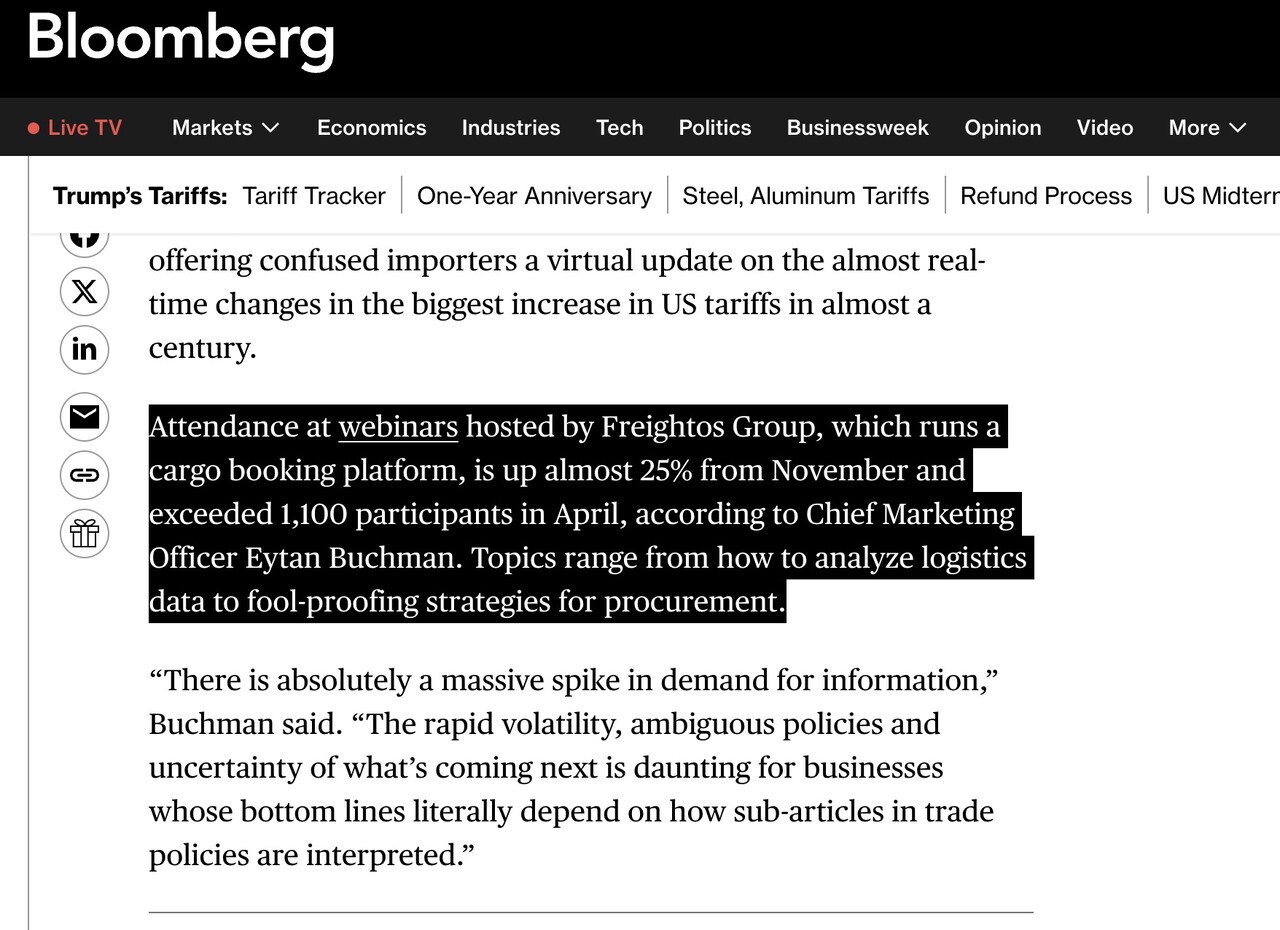
The monthly state dinner. Real experts, honest takes, no pitch slide in the middle.
Partnership webinars are especially good early on, because you’re borrowing someone else’s audience and giving them something in return. Two embassies hosting one dinner pulls a bigger crowd than either could alone. Also: more canapés.
Interviews of industry figures are the other underrated move. They do four things at once: give you content, build your network, flatter the guest, and position you as the venue where serious people show up. You are not pretending to be the expert. You’re being the place where experts gather. There is no faster way to buy credibility in a new market. My personal favorite is the tier-two expert — still excited enough to amplify, not so famous that they ignore your Calendly link.
At Freightos, some of our best content was interviews I personally did very little work on. My job was to get the right person in the room, ask one decent question, and shut up. Turns out “shut up” is an underrated diplomatic skill.
One small tactical note: use polls and questions inside your live events to identify hand-raisers. It’s hugely impactful (converts at something like 10% of attendees if you do it well).
⚠️ How to Get Deported (Anti-Patterns)
Here’s the section I wish someone had handed me six years ago. These are the things I did wrong, on repeat, sometimes for embarrassingly long stretches. Each one is a way to get quietly deported from the planet — not with a scandal, but with a slow, polite fade into irrelevance. The natives don’t tell you you’re irrelevant. They just stop returning your pings.
1. Publishing things that are interesting to you, not the natives. If you find yourself thinking “this is such a clever internal angle, our team will love it” — nobody outside your team will. This is the most common newsroom failure. The test: would a real prospect, mid-workday, stop scrolling for this? If no, kill it. I’ve published a lot of clever stuff nobody cared about. I’ve also published boring stuff everyone cared about. The boring stuff won. Every time. Embarrassingly so.
2. Publishing the obvious data. Obvious data gets eyeballs but not shares. “Shipping prices went up in Q3” gets a scroll. “Shipping prices from Vietnam to LA are 40% higher than China to LA even though nobody is talking about it, and here’s what it means” gets a save, a forward, and a DM from a reporter.
The difference is whether the data tells the reader something they didn’t already know. If it doesn’t, you’re publishing filler — and filler is exactly what’s drowning the internet right now.
3. Chasing SEO traffic over forwards. Ten thousand SEO visitors who bounce in three seconds are worth less than fifty people who forward an email to a colleague. Fifty forwards is a pipeline. Ten thousand bouncers is a vanity report you’ll show to a board deck once and never again. I still catch myself looking at traffic numbers and feeling good about it. Do not. Slap your own wrist. I mean it.
4. Hiding behind the logo. See above. If your newsroom has no named humans, nobody will ever feel like they know you. Humans are the interface. Logos are just the stationery.
5. Building on rented land. If your entire newsroom is a LinkedIn company page, you do not have a newsroom. You have a posting habit on someone else’s platform. One algorithm change and you’re invisible. One platform pivot and you’re gone. Build the owned assets first. Use the rented channels as distribution.
6. Faking credibility through irrelevant wins. I once got Freightos a Wall Street Journal mention for a data analysis about consumer shopping patterns that had almost nothing to do with what we actually sold. Great for the ego. I basically had the clipping framed. Completely useless for pipeline. A media mention that doesn’t reinforce what you want to be known for is worse than no mention — it’s a distraction for you and a confusing signal for the market. The freight buyer who Googles you and finds a WSJ piece about e-commerce returns is, correctly, going to wonder what you actually do. And then wonder if maybe they should check back later. They won’t.
7. Quitting before it’s worked. The single biggest one. The first six to twelve months will feel like shouting into a vacuum. The natives aren’t checking in every Friday morning to see what you’ve dropped. They will start to — but not on your schedule. The flywheel always kicks in later than you think. Plan for that. Then plan for it to take three months longer than that. Then budget one more quarter after that, because you’ll be wrong about the first two estimates.
How You Know It’s Actually Working
Ignore traffic. Ignore impressions. Ignore reach. All three are gameable. All three lie. All three will seduce you into optimizing for the wrong thing for eighteen months before you notice.
The signals that actually indicate an embassy is getting somewhere:
- Shares, saves, and DMs on LinkedIn — especially the DMs, which are the deepest form of “I want to show this to someone else.”
- Forwards of your newsletter to other humans.
- Reporters subscribing to your email list (they will, and you’ll know because their email addresses give them away).
- Trade publications citing you without having been pitched.
- Inbounds — from prospects, reporters, partners — referencing specific pieces you published, by name, months after you published them.
- Other embassies (competitors, partners) starting to cite you in their content. This is the big one. This is when the natives have stopped treating you as an alien.
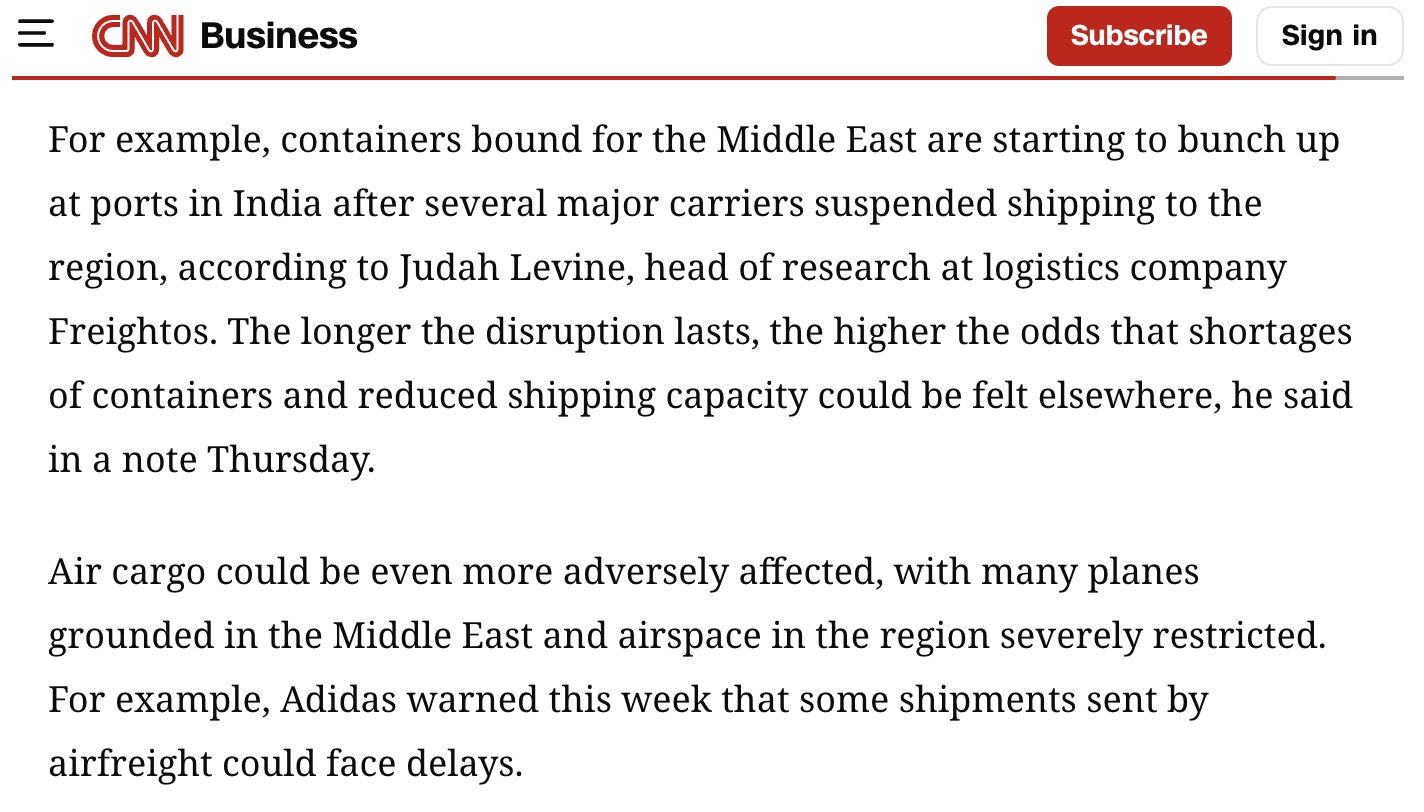
CNN citing Freightos data without a pitch. This is what a working embassy looks like from the outside.
Notice what’s not on this list. Traffic isn’t. Social followers aren’t. Likes aren’t. Domain authority isn’t. Those things are downstream of doing the real work, not proof of it. They’re the decorative flags, not the treaties.
The Unfair Part
Here’s the honest thing nobody tells you when you decide to open one of these:
It takes about three months to get your first real signal, and about six before anyone outside your team believes you have an embassy at all. The temptation to kill the program — or pivot it, or hand it to an agency, or water it down into “content marketing” — will be constant. Your CFO will ask what the CAC is. A senior exec will ask why you’re publishing a freight-rate newsletter instead of a product launch video. You will not have a good answer for any of them. Not one they’ll like, anyway.
You do it anyway.
Because at the end of that stretch, if you’ve been disciplined about the mission, honest about your credentials, consistent with cadence, and human with your ambassadors, something specific and durable starts happening.
Reporters email you first. Prospects walk into sales calls half-convinced already. Your data gets cited in other people’s keynotes. The natives, finally, start treating you like you belong on their planet.
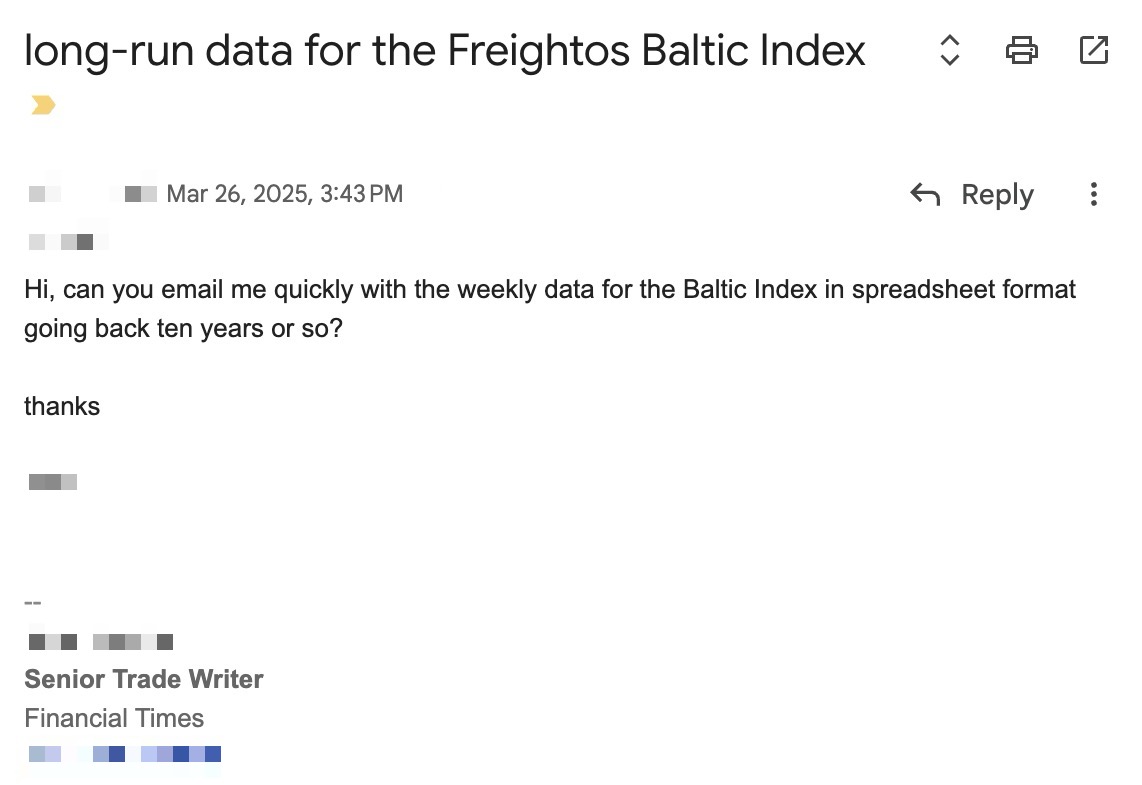
A Financial Times reporter emailing first. There is no better signal an embassy is working.
At Freightos, the newsletter I started as a Google Sheet of links I’d copied from Twitter eventually turned into something with tens of thousands of subscribers, media pickup from the Wall Street Journal, the Economist, and the BBC, and seven-digit revenue. The marketing strategy became a business unit. The embassy became a small independent nation. With its own tiny flag. And, eventually, its own currency.
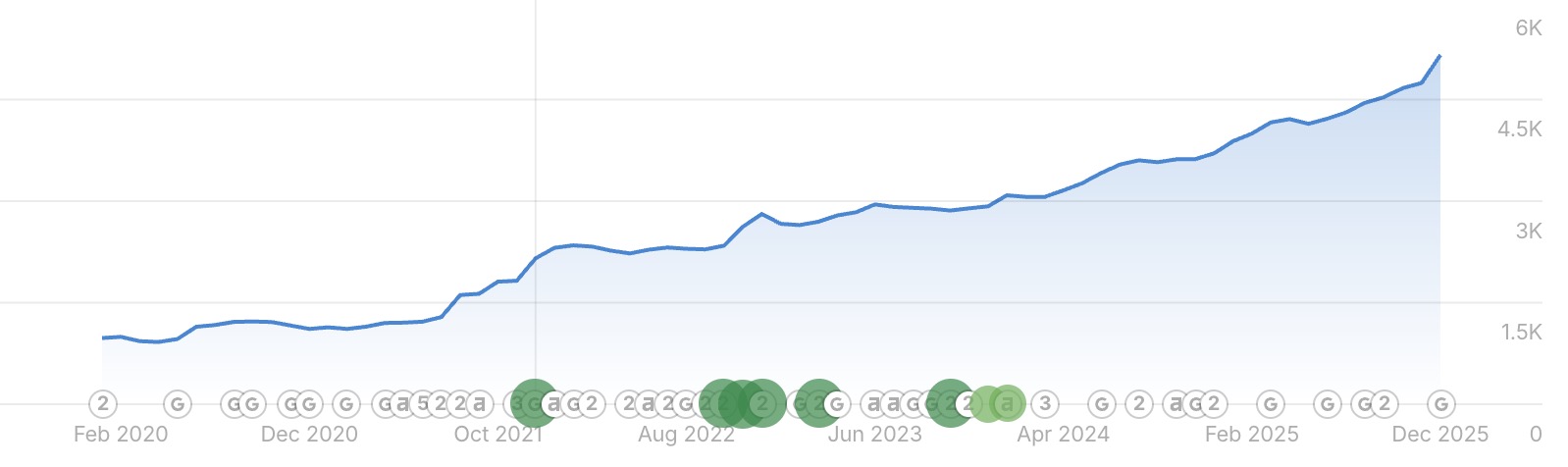
The flywheel compounding over years. Boring. Slow. Durable. This is what a newsroom's authority looks like when you don't quit at month six.
None of that happened because of a single brilliant idea. It happened because we kept showing up, week after week, as a foreign entity that slowly, boringly, made itself useful enough to the locals that they eventually forgot we were aliens at all.
That’s the whole trick. That’s the whole playbook.
Go open your embassy. The natives are waiting. They don’t know it yet, but they are.
Frequently Asked Questions
What is a brand newsroom?
A brand newsroom is a publishing operation a company builds to earn standing in its industry — not to sell directly, but to become the venue where the market goes for analysis, data, and insight. Think of it as media infrastructure that belongs to a brand, staffed with named humans, publishing on a regular cadence, and measured by credibility and inbound relationships rather than traffic.
How long does it take to build a brand newsroom that actually works?
Expect a six-to-twelve month ramp before external signal shows up consistently — reporter inbounds, prospect recognition, trade citations. The first quarter feels like shouting into a vacuum. The second quarter a small audience forms. By month nine the flywheel starts turning. Most companies quit before month six, which is why most companies don’t have functioning newsrooms.
Do you need proprietary data to run a brand newsroom?
No, but you need at least one strong credential. Proprietary data is the strongest. A genuinely spiky point of view is second. Privileged access to industry figures you can interview is third. If you have zero of the three, don’t open the newsroom — go build one of them first. Publishing without a credential is how brand newsrooms fail quietly.
What's the right cadence for a brand newsroom?
Two to three times a week on LinkedIn and short-form channels for early validation, paired with a weekly or bi-weekly newsletter for depth. Monthly is slow enough that no reader habit forms. Daily burns out the team and erodes quality. Weekly is the sweet spot for the load-bearing diplomatic pouch — the newsletter — with faster cadence for cheaper tests on LinkedIn.
How do you know a brand newsroom is working?
Look at shares, saves, and DMs on LinkedIn; newsletter forwards; reporters subscribing to your list; trade publications citing you without pitches; and inbound references to specific pieces you published. Ignore traffic, follower counts, and domain authority — all three are gameable and none tell you whether the industry actually trusts you.
Let's make a deal. Drop your email and I'll let you know when I post new insights.