Redfin's Data Marketing Play Teardown: From Housing Metrics to Media Megaphone
tldr
Redfin leveraged its position as a vertically integrated brokerage to turn proprietary ‘upstream’ data—like tour requests and bidding wars—into a weekly ‘must-read’ for the entire industry. By ’nowcasting’ the market faster than the government, they’ve won the narrative war against larger rivals. It’s a masterclass in turning intellectual authority into a customer acquisition engine.While larger competitors like Zillow compete on raw traffic and media aggregation, Redfin chose a different battlefield. They leveraged their unique structural position to win the “narrative war” in real estate, transforming themselves from a mere marketplace into the market’s primary source of economic truth.
This is the story of how Redfin turned housing data into a media megaphone and intellectual authority into a customer acquisition channel. They didn't just report on the market; they trained the market to wait for their signal.
In previous teardowns, I looked at how Brex turns spend data into a benchmark and how Profound uses AI visibility scores to drive sales. Redfin’s play is different: it’s about speed and “nowcasting.”
Here is my analysis of Redfin’s data engine, broken down by the three pillars of data marketing:
- Data: The raw, defensible asset (The Scoreboard)
- Insight: The narrative layer that explains why (The Coach)
- Distribution: The engine that gets the story heard (The Megaphone)
What Redfin Is (In One Breath)
Redfin is a tech-powered, vertically integrated real estate brokerage. Unlike competitors who are primarily media aggregators selling leads, Redfin employs its own agents and builds the software they use.
This critical difference gives them exclusive access to proprietary “upstream” data—the digital paper trail of buyer intent that includes tour requests, offers written, and bidding war specifics. While Zillow sees the sale, Redfin sees the search. This unique data moat allows them to narrate the market with a depth and speed rivals cannot match.
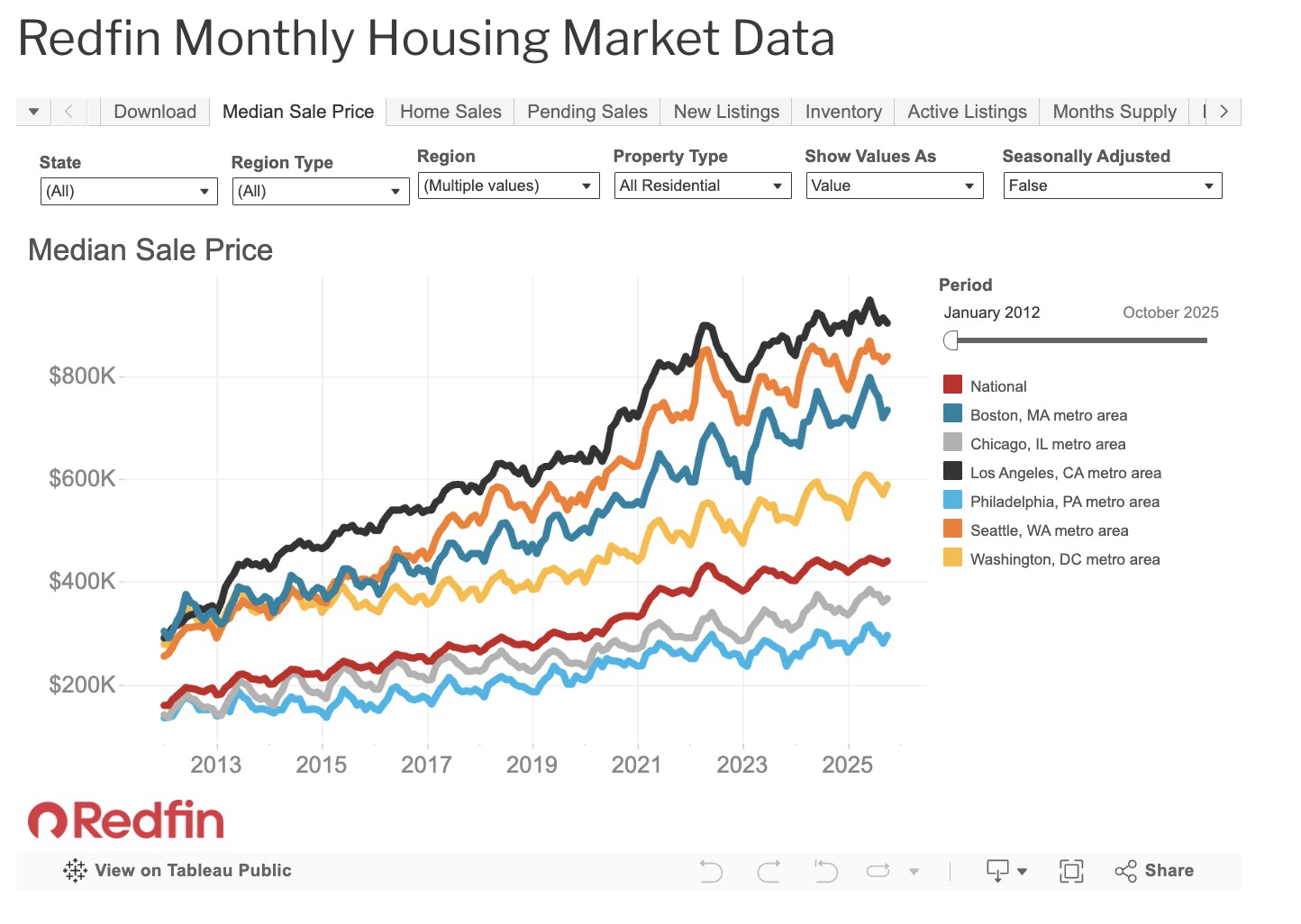
The raw Redfin data share
My Framework to Judge a Data Play
When I evaluate a data marketing strategy, I look for three interconnected pillars: Data, Insight, and Distribution.
Think of it as the Scoreboard (the numbers), the Coach (the analysis), and the Megaphone (the reach). Redfin provides a masterclass in orchestrating all three.
Data: The Layer That Trains the Market to Come Back
The “Nowcasting” Advantage
The strategic brilliance of Redfin’s data layer lies in solving the single biggest friction point in real estate information: latency.
Traditional government housing reports are lagging indicators, often published months after the market has moved. Redfin pioneered “nowcasting,” using high-frequency leading indicators to narrate market shifts in near real-time. They transformed data from a historical record into a forward-looking radar.
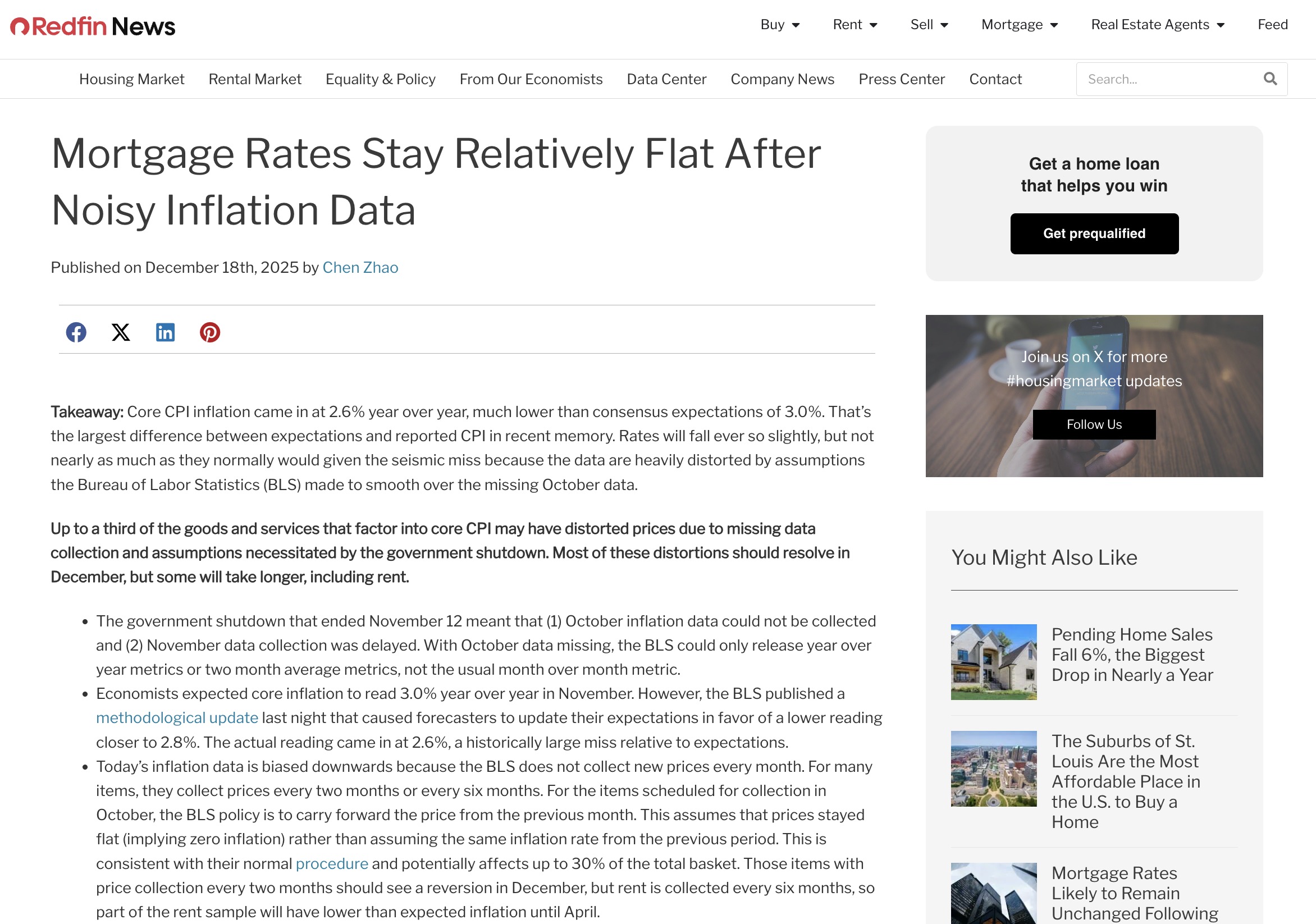
Redfin's weekly update is their high-impact data+expert play
The Scoreboard Components
- The Weekly Market Update: This is the cornerstone. By reporting on leading indicators like touring activity and mortgage applications every week, Redfin established a reporting cadence four times faster than the industry standard. They conditioned journalists to turn to them first.
- The Upstream Data Moat: Because they employ the agents, they see the intent signals: tour requests, offers written, contingencies waived. This is a cleaner signal of market heat than closed sales.
- The Redfin Data Center: Their “open source” masterstroke. They publish millions of rows of raw, downloadable data in the Redfin Data Center, segmented by metro and neighborhood. This crowdsources analysis, empowering academics and local journalists to write stories citing Redfin as the source.
- Proprietary Indices: They challenge standards with the Redfin Home Price Index (RHPI) (a faster alternative to Case-Shiller) and the Housing Demand Index (built on tour/offer data). Their populist angle? “The government measures dollars; we measure people.”
Data Scorecard
- Frequency: High (Weekly). This is the gold standard for habit-forming data.
- Uniqueness: High. Proprietary “upstream” brokerage data is incredibly hard to replicate.
- Access: High. The Data Center is ungated and downloadable.
- Authority: High. Validated by academic partnerships (like this NBER paper).
Insight: The Research Layer That Is Killing It
Data is only valuable if it tells a story. Redfin’s genius is transforming raw numbers into culturally resonant narratives that tap into deep-seated public anxieties.
Owning the Cultural Conversation
Redfin identified and colonized three primary narrative verticals:
- The Migration Narrative (“Zoom Towns”): During the pandemic, Redfin didn’t just report on migration; they architected the story. By tracking search behavior on the U.S. Housing Market hub, they created “Net Inflow/Outflow” leaderboards. This became media catnip.
- The Climate Risk Gamble: In a bold move, they integrated climate risk data directly onto listings. It positioned Redfin as the transparent “honest broker” prioritizing consumer safety over commissions. Read their climate risk analysis here.
- The Investor Narrative: By quantifying “Wall Street vs. Main Street” competition, they tapped into economic populism. Their reports on institutional investors validating the feeling that everyday buyers are being outbid went viral because they validated public frustration.
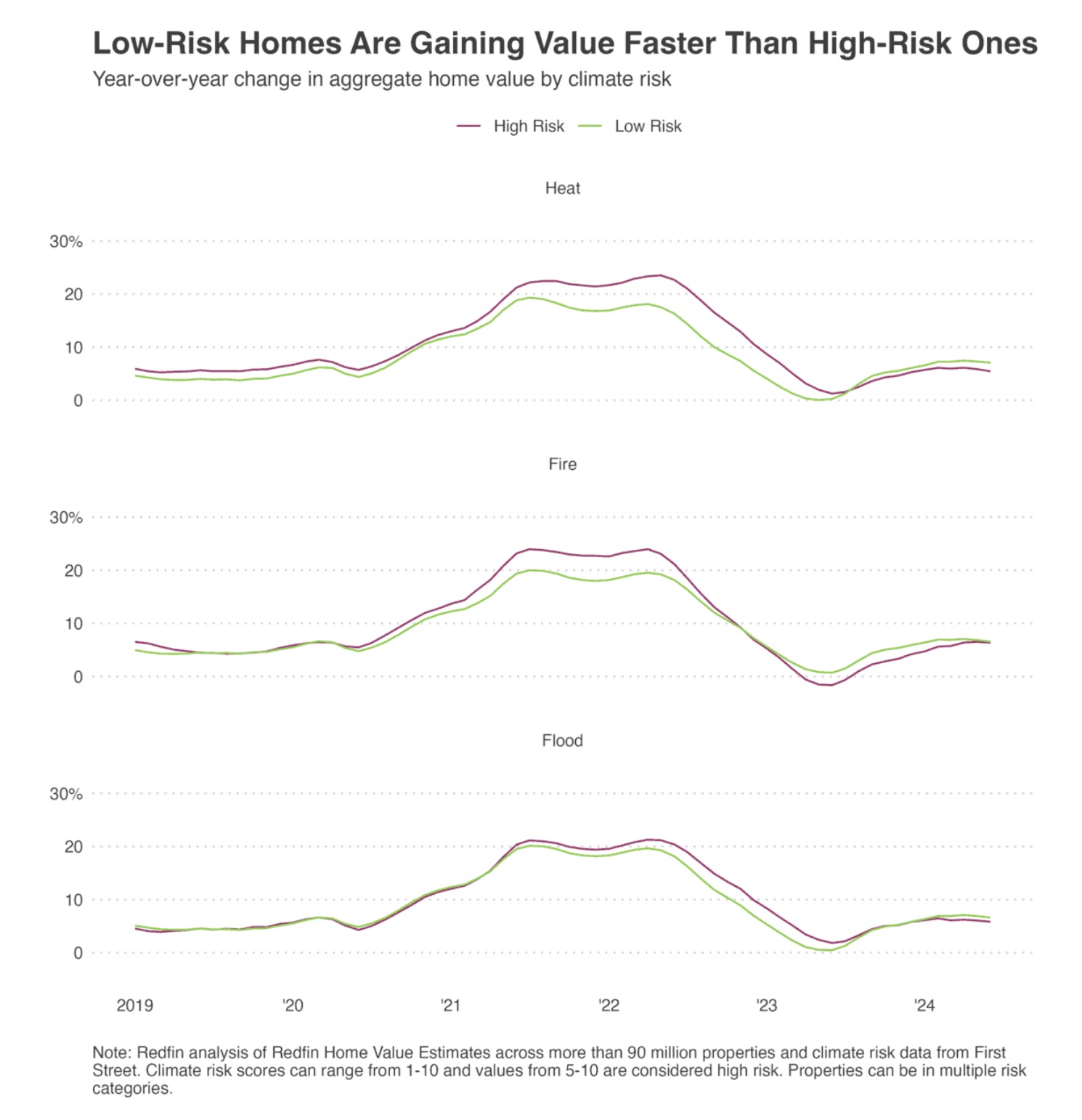
How Redfin uses their climate risk data
The “Newsroom” Culture
This isn’t corporate comms; it’s a media outlet.
- The Economist as Public Intellectual: Chief Economist Daryl Fairweather, PhD, isn’t just a housing expert; she’s a public macroeconomist. Her academic credentials lend unassailable authority.
- The Activist CEO: CEO Glenn Kelman acts as “Editor-in-Chief,” using data to take aggressive stances against industry practices like “pocket listings.”

Glenn Kelman on CNBC talking data
Distribution: The Loop That Turns Interest Into Pipeline
Redfin’s distribution strategy is a “press-driven flywheel” designed to make its data the default source for anyone thinking about housing.
The Distribution Engine
- Media as the Megaphone: The weekly data release is timed perfectly for journalists on a deadline. When rates move, Redfin is the “first draft of history.”
- High-Authority Owned Hubs: The U.S. Housing Market hub and Data Center aren’t just content repositories; they are SEO anchors that have attracted thousands of backlinks.
- The “Force Multiplier” Effect: By making raw data downloadable, they empower local beat reporters to craft hyperlocal stories. Redfin provides the tool, and the reporter does the distribution work.
- Experts as Brand Assets: Every time Daryl Fairweather appears on CNBC, it’s a brand deposit. They’ve turned their team into media assets.
The Verdict
What I Love
- Winning the Narrative War: They couldn’t outspend Zillow, so they outsmarted them. They won on intellectual authority.
- Weaponizing Transparency: Using “bad news” (climate risk, market slowdowns) to build immense trust. They tell the truth, especially when it hurts.
- Owning the “Now”: The weekly cadence creates a dependency loop that locks out slower competitors.
- Operationalizing Academia: Hiring PhDs and publishing in the NBER elevates their marketing to the level of serious economic research.
What I Would Do Differently
- Build the Branded Destination: Their data is scattered. Consolidating it under a single “Redfin Benchmark” hub would improve user experience and brand clarity.
- Unlock Programmatic SEO: They have the data but lack the long-tail pages for specific metros/zips that Profound or Zillow excel at. Huge missed opportunity.
- Launch a Data-Driven Email Brief: It is a crime that there isn’t a dedicated, opt-in “Redfin Research” newsletter. Don't rent your audience; own it.
- Amplify the CEO: Glenn Kelman is a star, but he could be the face of a regular “Stat of the Week” narrative to further elevate the strategic message.
Why The Engine Works
Redfin’s engine works because of strategic asymmetry.
Zillow wins the war for breadth (the “encyclopedia”). Redfin wins the war for depth and speed (the “ticker tape”). They understood that in a high-stakes, low-trust industry, proof > persuasion.
They transformed data from a backend asset into a frontend product that constantly proves their value.
How to Steal This Play (Without Stealing the Soul)
Any B2B marketer can adapt Redfin’s core principles:
- Find Your “Exhaust” Data: Identify the unique data your product generates (logins, usage, transactions). This is your proprietary wellspring.
- Become the “Ticker Tape”: Pick a reporting cadence you can own (Weekly > Monthly > Quarterly). Speed is a differentiator.
- Make Data a Public Utility: Create a “Data Center” with downloadable, citable raw data. Let others build their stories on your foundation.
- Build Your Newsroom: Hire subject-matter experts who can translate numbers into narratives. Give them a byline and a voice.
- Validate, Don’t Just Report: Connect your data to cultural anxieties (e.g., “AI taking jobs,” “Inflation hurting wallets”). Find the emotional core of the number.
Part of the Data Marketing Teardowns series
Let's make a deal. Drop your email and I'll let you know when I post new insights.